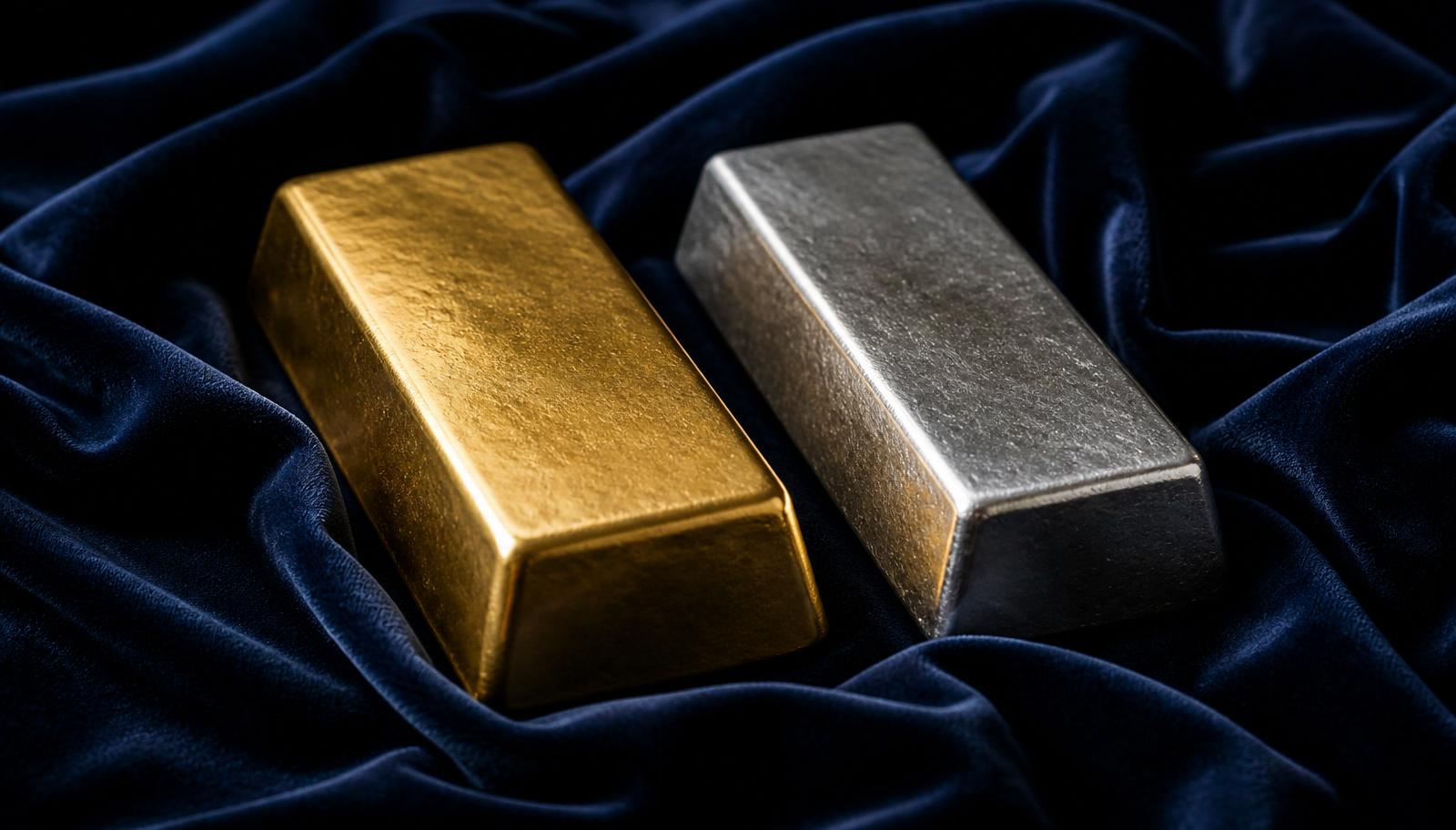
Investors new to precious metals often assume gold and silver are interchangeable. They are not. While both are monetary metals with long histories as stores of value, they behave differently in modern markets, carry different practical requirements, and serve different purposes in a portfolio.
Market size and volatility
The gold market is significantly larger than the silver market in dollar terms — by a wide margin. That size difference has a direct consequence for price behavior. Silver is materially more volatile than gold, both to the upside and the downside. In strong precious-metals bull markets, silver often outperforms; in downturns, it typically falls further.
Monetary versus industrial demand
Roughly half of annual silver demand comes from industrial applications — electronics, solar panels, medical devices, and specialty manufacturing. Gold, by contrast, is dominated by investment and jewelry demand, with industrial uses making up a small fraction of total consumption. This means silver prices respond more directly to global industrial activity, while gold responds more to monetary conditions and investor sentiment.
| Attribute | Gold | Silver |
|---|---|---|
| Volatility | Lower | Higher |
| Industrial demand | Minor | Significant (~50%) |
| Value per ounce | Higher | Lower |
| Storage volume per dollar | Compact | Substantially larger |
| Typical portfolio role | Preservation | Growth-oriented monetary metal |
Storage and logistics
Because silver is worth far less per ounce than gold, a meaningful silver position occupies far more physical space and weight than the equivalent dollar value in gold. For investors planning to store metal at home or in a bank safe deposit box, this is not a trivial consideration. A hundred thousand dollars of gold fits in a small pouch; the same value in silver requires substantial dedicated storage.
Premiums and spreads
Silver typically carries a higher percentage premium above spot than gold, because minting, packaging, and shipping costs are similar in absolute terms but represent a larger share of silver's lower per-ounce value. For a deeper explanation, see [How Precious Metals Pricing Works](/knowledge-center/how-precious-metals-pricing-works).
Gold preserves. Silver participates. A thoughtful allocation often includes both — sized to purpose, not to preference.
Choosing an allocation
There is no universal ratio. Investors focused primarily on capital preservation and generational transfer often weight heavily toward gold. Those with a longer horizon and higher tolerance for volatility may hold a larger silver position as a growth-oriented monetary metal. If you are considering precious metals inside a retirement account, review [Understanding Precious Metals IRAs](/knowledge-center/understanding-precious-metals-iras) for the eligibility rules that apply to both metals.